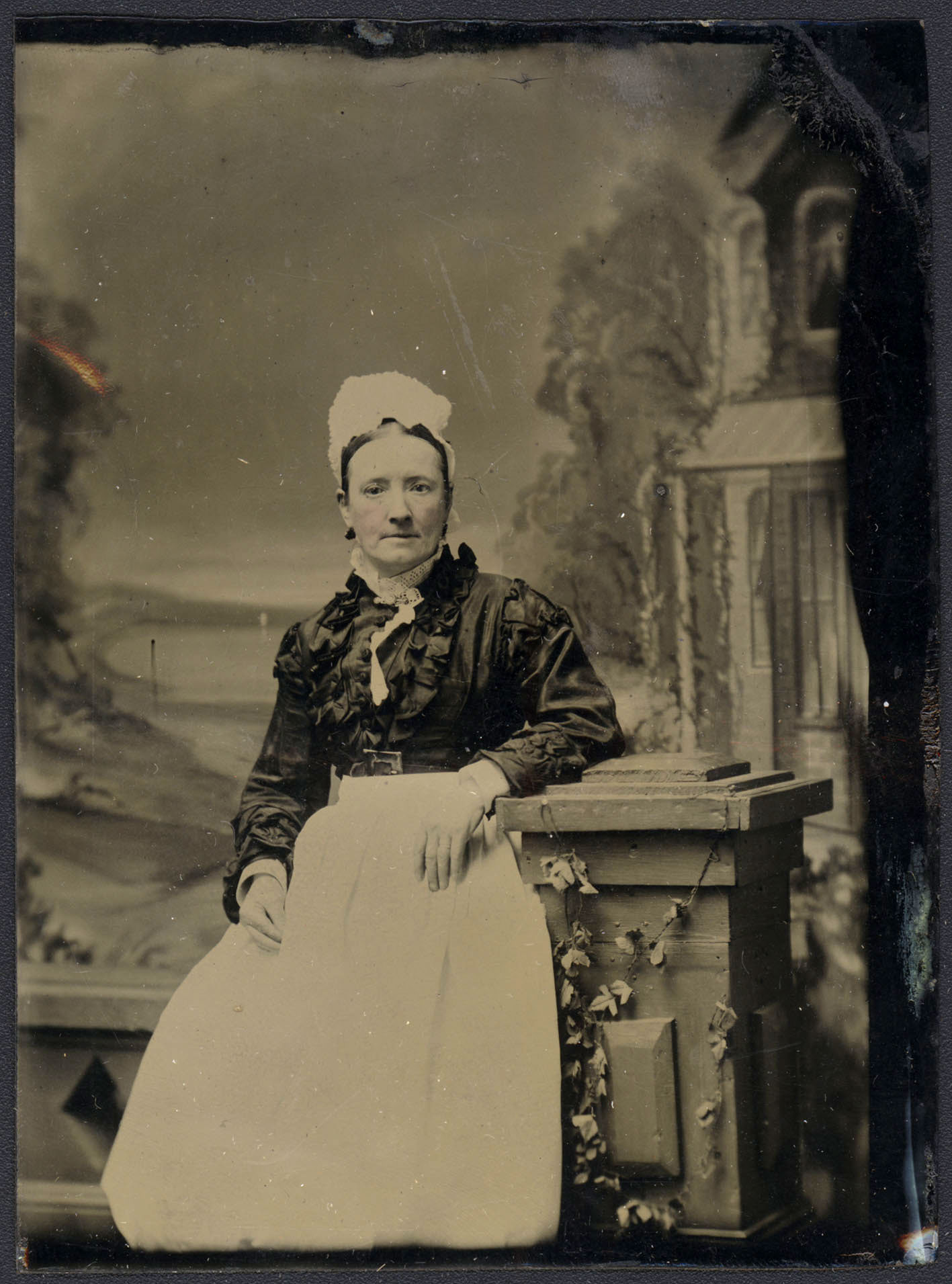
 Carrie Brown aka "Ol' Shakespeare"
RETURN TO HOME PAGE
REAL LIFE GHOST STORIES
R I P P E R S I N A M E R I C A
By Asha Ariel Aleia
The case of Carrie Brown, who died in New York in 1891, continued the legacy of Jack the Ripper of Whitechapel, (London) England, famous for the murders of 1888-1889 there. Anyone who has read the letters "From Hell" knows that there were taunts in them to a person named "Boss." It is often the case that the public jumps to the conclusion that the word "boss" is used in the usual sense, and such was the case. But there was another meaning for the word "boss." And, even though his reign had been earlier by date than 1888, there was a well known politician, named Boss - Boss Tweed. By the 1890s there were other political "bosses," and many a regular sort of guy or "jack." Did you know that "jack" was also a gambling term that meant "money (money put up on the table)?" For some other Irish gambling terms of the time, go to this site: Irish Slang. Another famous taunt of the Ripper letters involves a return comment made to the City of New York - from England - after American police made the remark that, should there have been such a case in their city, it would have been solved very rapidly and not been dragging on so long without solution. In the Ripper's return volley, he states that the U.S. would soon be seeing him.
To read details of the Carrie Brown investigation, one might be well served to start by going to:
The Investigation, Friday 24 April, 1891 (Scroll down that page to article)
OR: Choked, Then Mutilated, A Murder Like One of Jack the Ripper's Deeds
OR: The American Murders of Jack the Ripper
There are times when events happening in apparently differing circles are actually traveling along in a course designed to intersect with one another. In the 19th century this was apparently the case.
On the one hand, there were the research scientists, largely untethered by law;

the only restraint being financial. Many researchers operated out of their own homes. During the 19th century there were many advances in the scientific and medical fields.
*****************************
QUESTION: What is the connection between Frankenstein, Dr. Jeckyl & Mr. Hyde, Arrowsmith, Our Medicine Men, Jack The Ripper, and that great Sci-Fi classic: The Fly? SECOND QUESTION: What does this have to do with "MAJESTIC?" Or Cecil Rhodes and his secret societies?
CLUE: THINK LIFEFORMS...ORGAN HARVESTING...INERT SALTS...UFOs AND TEST-TUBE CREATIONS...BETTER HEALTHCARE FOR THE "WORTHY"...THE DEVELOPMENT OF THE SPECIES...POLITICAL-SCIENTIFIC-MEDICAL AGENDAS
*****************************
In the fields of anesthesia and embalming there were newly successful products: Chloral hydrate and carbolic acid. Substances which today would be hard to obtain without proper authorizations could be had at the local pharmacy or on the street.
In "The Alienist," Caleb Carr, writes:"Chloral hydrate was one of the banes of his existence, a bitter tasting, neutrally colored, somewhat caustic compound that slowed the rate of the heart and thus made the subject singularly calm - or, if used as it was in many saloons, almost comatose and an easy target for robbery or kidnapping."
According to an article in Encyclopaedia Britannica, "Chloral hydrate was first synthesized in 1832 but was not introduced into medicine until 1869, when Mathias E.O. Liebreich discovered its effectiveness in inducing sleep. Chloral hydrate acts as a depressant on the central nervous system, with sedative effects similar to those of barbiturates. A therapeutic dose (500 mg to 1 g) produces a deep sleep lasting four to eight hours with few afteraffects....Symptoms of overdose may include deep stupor, dilation of blood vessels, fall in blood pressure and body temperature, and slowed respiration. In a severe overdose, death usually occurs within 5 to 10 hours."
Carbolic acid, blamed in the deaths of so-called "suicides" was used for embalming. This substance was also very easily obtained at the time.
Read an article written by South Street Seaport Museum (1995) "dead houses" (taverns). Excerpted text from the article states: "Germs were not the only hazard patrons faced in saloons. In the seedy establishments that lined the Bowery called "morgues" or "dead houses", drink could be so poisonous that it could stupefy the living or embalm the dead. According to Jacob Riis writing in the 1890s, stalebeer dives served doctored, unlicensed beer, laced with the flat dregs of used kegs. Cheating customers by using false-bottomed measures or by serving up fake drink-fermented turnip juice charged with carbolic acid gas or liquor thinned with prune juice, water, and a dash of cayenne pepper - were also common practices in Bowery dives.
Not only was the drink sometimes dangerous, so were the saloon regulars. Innocents wandering into Bowery dives might be treated to a "mickey" or "mickey firm" - a dose of chloral hydrate slipped into their ale by thieves eager to rob the drugged victim. One particularly violent establishment was dubbed "Tub of Blood."
The worst dive on the Bowery at the turn of the century was known as John McGurk's Suicide Hall, just above Houston Street. Customers there were mostly sailors. Here, a bouncer named Eat-Em-Up Jack McManus and a waiter known as Short-Change Charlie reigned. Considered a place of last resort, prostitutes sometimes ended their lives there."
Not far away, near the river was the East River Hotel. In this excerpt from R. Michael Gordon's works, we read: "The once-proud East River Hotel was, by 1891, well past its best days, if it ever had any. This so-called "dive" or flophouse was very near the imposing Brooklyn Bridge, which dominated the New York City skyline. The hotel had served as a meeting and drinking place for the men who worked the docks for many years but had fallen into disrepair. Located near the docks and facing the East River, it was the first place where ships, mostly from the European mainland and England, bearing huge numbers of immigrants would dock. It was not too surprising to find that this area was also crowded with prostitutes, many on their last legs. By the time of Carrie Brown's murder the four-story brick building, then owned by Mr. James Jennings, was reported to be a "lodging house of unsavory reputation, and is chiefly resorted to by the women who prowl about the neighborhood after nightfall." The "bawdy resort" on the southeast corner of Catharine and Water Street, fronting on Water Street, was badly in need of repairs, which would never come. It was, however, able to supply cheap tiny rooms at around 25 cents a night to the few who cared to visit and more to the point it had a small bar located on the first floor. Beyond being the Carrie Brown murder site, the location was also rumored to have been used by the underworld thugs in control of the local area for dumping their victims into the East River. Local legend has it that a subterranean tunnel had been constructed for just such purposes, but that rumor has yet to be confirmed.
For more than half an hour Carrie Brown and Mary Healey sat at a small table drinking beer as bartender Samuel Shine cleaned glasses and served the small group cheap drinks. That evening Mr. Shine would also serve as night clerk for the hotel. It was to be just one more long night of drunken women and dirty men for the aging bartender, but at least the work put a roof over his head and food in his stomach. It was more than many who called the docks their homes could boast, so he did not complain very much
It did not take long for the drinks to take effect on Carrie, as another woman joined the group. Before long Mary would leave the hotel with the woman named Lizzie, leaving Carrie to herself. Now bolstered by drink, she began to tell the housekeeper, Mary Miniter, about her long life and the family who she said no longer seemed to care about "Old Shakespeare." For Miniter, who had never met Brown before, it would not be long before she would find a reason to leave. Later, Miniter was interviewed and would give one of the few accounts of the life of Carrie Brown to the readers of the daily New York papers as they began to ask if this was one of Jack's!"
VIVISECTION AND ORGAN HARVESTING
During these same years the subject of "vivisection" was a debated topic. Victorian writers told of hair-raising experiments on animals, including horses, while still alive. But human cadavers for experiments in transplantation were presenting difficulties, as well. In an article written about the history of Johns Hopkins, it is noted that Franklin P. Mall was having a problem getting sufficient cadavers. After they were more plentiful, Mall had an icebox built and embalmed them with carbolic acid. (American Heritage, 1976)
The Victorian Women Writers Project included the following:
"At present vivisectors are timid and hypocritical. They sigh that the "rat or two" that they ask in their love for humanity is grudgingly bestowed; but they do not mention so freely the hundreds of experiments in which they keep animals skinned, with nerves laid bare, irritated with electricity and in every possible way, cut open their living bodies, roast, crucify, boil, subject them to experiments causing the most excruciating agony in the most sensitive nerves and the greater the suffering the greater the "joyful excitement" with which they inflict it. They already say among themselves that no true results can be reached without human subjects." (See:indiana.edu/~letrs/vwwp/cobbe/viviamer.html.) A medical journal, 1881, mentions the first skin transplant. Corneal transplants were reported as early as 1880. Kidney transplants were under research, as well.
In reading the official documents of the inquest into another Ripper murder, the death of Annie Chapman, (Whitechapel,) the following (edited) shines more light:
"I received a communication from an officer of one of our great medical schools, that they had information which might or might not have a distinct bearing on our inquiry....some months ago an American had called on him, and asked him to procure a number of specimens of the organ that was missing in the deceased. He stated his willingness to give ce20 for each....He desired them preserved, not in spirits of wine, the usual medium, but in glycerine, in order to preserve them in a flaccid condition, and he wished them sent to America direct. It is known that this request was repeated to another institution of a similar character."(casebook.org/official_documents/inquests/inquest_chapman.html)
If one reads the documents of the Annie Chapman Inquest further one reads about the night of her murder and finds the circumstances suspicious...
"The murder seems, like the Buck's-row case, to have been carried out without any cry. Sixteen people were in the house....heard no noise....none of the occupants of the houses...heard anything suspicious....the injuries have been made by some one who had considerable anatomical skill and knowledge. There are no meaningless cuts. It was done by one who knew where to find that he wanted, what difficulties he would have to contend against, and how he should use his knife, so as to abstract the organ without injury to it. No unskilled person could have known where to find it, or have recognised it when it was found. For instance, no mere slaughterer of animals could have carried out these operations....some one accustomed to the post-mortem room. The conclusion that the desire was to possess the missing part seems overwhelming."

There...it brings back the original concept:

The women's faces tell it all. If one had been attacked by a murderer or surprised from behind,one's facial expression should likely be anything but calm. And yet the faces of the women do not look horrified, terrified, or in great pain or distress...and nobody heard a sound. The bodies were not quickly and meaninglessly slashed - they were "operated upon." This takes time. And loss of blood. When the human remains were found outside, there was not enough blood present for the murders to have taken place there. Nor enough time to carefully remove an internal body organ without being seen by someone. It appears that the women were killed inside and then their remains deposited on sidewalks and other outside locations, with suitable cuts to leave an overall impression of a monstrous attack.
The work of more than one person - the "doctor" and his assistant(s)? Might it not be ORGAN HARVESTING?...in 19th century. Britain and America.
With an outraged public decrying the harmful treatment of animals, it would have become necessary to disguise the "donors" as victims of crime by a demented person unknown and unable to be found. In a report by the doctor who performed the autopsy on Carrie Brown, a man named Jenkins, it was said that the "killer had attempted to completely gut his victim."
WHY WAS IT NOT REALLY SOLVED?
New York in the 1890s was a hotbed of immigrants, mostly German and Irish in the Bowery. And Tammany Hall, the political system in New York made infamous by a congressional probe of its corruption, a system which touched upon even the police department, doled out memberships, appointments, favors, and jobs, and deals to its followers. To read about the infamous McGurk's Suicide Hall, in which many "so-called suicides" by women took place by drinking carbolic acid (phenol!), go to: MAE WEST WAS THERE AT MCGURK'S, TOOOr look at the neighborhood through pictures at:FORGOTTEN NY. The number varies widely, from a low of six to more than 15, with the latter seeming likely. Knowing that death by drinking carbolic acid is neither pretty nor painless, why would so many women commit suicide in so short a time by such a method? If your answer is that suicide is not generally contagious, that death in extremely painful ways, is not usually popular, and that you question this idea, keep reading. For once one begins to walk the area, to feel the women's energies, one knows that, while the occasional suicide was likely, this particular set brings to mind the question: "What did they know?" Did the women of McGurk's Suicide Hall, Bowery, New York know Carrie Brown? It would seem likely that they would at least have had an acquaintance with her. Her death was not that far away in the East River Hotel. It was a community that knew one another in daily routines. Were they being silenced?
McGurk's Suicide Hall and other dives of the time nearby were frequently the scene of sailors being "rolled," a practice of slipping a "Mickey Finn" to a mariner, likely just in from sea. Chloral Hydrate, slipped into a glass of alcohol, called a "mickey" for short, would put a person to sleep. When he awoke, he was freed of his money, maybe his clothing - if he awoke at all. Chloral Hydrate was, as written earlier, easily available at these dives. Remember the calm look on the Ripper's victim's faces? Had they been slipped a "mickey?" Or other anaesthetic device or substance? It would have been easy to do. Which brings us to another part of the discussion.
Victorian and later Edwardian times were very judgmental ones. It would not be a far stretch to see that those women who were "down and out" and living by their wits or on the street or, in some cases, prostitution, would be judged harshly by the population. But, it must be remembered that these were the days before Social Security was in place. If a woman lost her means of support through the death or desertion of her husband or family and could not obtain employment, there was no welfare system to depend upon. Many women turned to one "customer" who hopefully kept them in good living conditions. Others were not so lucky. Even those who had a good "friend" might later lose him and be left to fend for themselves. The numbers of women in these conditions was appallingly high. It was not unusual to find women frozen to death on the steps of New York at the time. Still, those who were living in more comfortable conditions judged them as "fallen ones." In such an environment, it became easy to sell the idea that these women could "redeem" themselves by doing something for society - dying for it. Or, failing that, that they were so "down and depressed" that, quite naturally, they suicided. A hotel in those days could be gotten at prices from one cent to fifteen dollars. In many of the dives or Barrel Houses, for a small fee - one cent - a man could hang his body across a rope tied across the tavern. That way, when he passed out from drink, he could just hang there until he awoke and started to drink again.

For two-to-five cents, one could purchase a place on the floor in a hallway of a hotel or Dorm House, the pre-cursor to the Armories. For seven cents one could claim a hammock, strung two-high in lines (see photo on right). Spend ten to fifteen cents and one could rent an open room with cots/bunks/hammocks. For fifteen to 25 cents one could acquire a cubicle 6-1/2' x 4-1/2' x 7' high with chicken wire room = 200/room over a saloon or industrial space, known as a "Lodging House, "Cage House", or "Cubicle Hotel." For $1.00, a room with trouser pressing and stationary in a workingman's hotel could be had. When you read about the victims, you will sometimes find reference to their lodging house room or hotel room. At least for that time, they were staying at a place that, while not middle or upper class, was at least more private, a common place used by students and workers of the time...
On the other end of the pay scale, there were those who, by whatever means, had acquired fortunes. In order to legitimize their reputations in the Victorian and Edwardian age, churches and other organizations encouraged them to explore "philanthropy." And, so that great enterprise was born in the U.S. Schools like the one formed by Cooper were born, Rockefeller formed an institute of medicine and donated to many Bowery charities.
Into this world of rich men donating money to large ventures, research scientists, now funded for research and with new finds at their hands, emerged a need: human bodies, ALIVE, for medical research. Even rich persons, certainly ordinary persons, needed medical care. But, animal research could only go so far. Cadavers fished out of the river or dug up from graves by hungry medical students were no longer sufficient. Scientists were calling for "live" specimens. Even today, human organs can only live outside the body for a day or two. The live organ must be stored in the live human body until it is required.
Into that world stepped JACK THE RIPPER.
And the question becomes:
WHO WERE JACK THE RIPPER?
To read more go to
NEXT PAGE
Other RIPPER VICTIMS INCLUDED:

Mary Ann Nichols
31 August 1888
Annie Chapman
8 Sept. 1888

Elizabeth Stride
30 Sept. 1888

Catherine Eddowes
30 Sept. 1888

Mary Jane Kelly
9 November 1888

"Fairy Fay"
26 December 1887

Annie Millwood
25 February 1888

Ada Wilson
28 March 1888
Recommended site for more information on the Whitechapel victims:
CASEBOOK.ORG
Organ Harvesting today? READ:
IS YOUR LIFE WORTH MORE THAN MINE? by Mark Paul
asha@ashaofantares.com
CONTINUE READING RIPPERS IN AMERICA
NEXT PAGE
DISCLAIMER: These are not my words but those of
the spirits who wanted to tell their stories.
If you do not agree with their tale...
talk with them about it.
I am just the messenger!
Copyright 2006.Asha of Antares.Asha Ariel Aleia.All Rights Reserved.
Image of Carrie Brown courtesy:www.casebook.org
Image of original Rockefeller Institute board courtesy: "www.luminet.net
Image of Annie Chapman courtesy: www.etnografo.com
Image of Annie Chapman's plaque courtesy: www.truebritsjournal.co.uk
Image of 7-cent lodge courtesy:http://www.yale.edu
Image of fainting couch courtesy:www.victoriantrading.com
